

Smart Condo Security Transformation in a Luxury Singapore Condominium
Security and resident comfort are two defining elements in private condominium living across Singapore. However, maintaining both at high standards has become increasingly challenging due to rising manpower constraints, growing resident expectations, and fragmented communication workflows. Many estates still rely on manual logbooks, walkie-talkie communication, on-foot patrols, and WhatsApp message groups, which often result in response delays, inconsistent reporting, and operational inefficiencies.
This case study highlights how a premium condominium in District 10 was upgraded to a smart condominium security system integrating a BiomeX Smart Condo App, an ANPR carpark access system, and an Autonomous Patrolling Robot (APR). Together, these improvements enhanced resident experience, improved security visibility, and strengthened coordination between the management, security team, and residents.
The Condo Profile
- Private luxury development in District 10
- Over 1,200 residents
- Multi-tower estate with shared amenities and basement carpark
- Managed by an experienced MCST council and security team
The estate already had a strong reputation for privacy and comfort, so any improvements needed to be non-disruptive, discreet, and resident-friendly.
Challenges Before the Upgrade
The management council observed a few recurring pain points:
- Carpark Entry Delays – During morning and evening peak hours, vehicle queues often formed at the gantry because manual checks and access cards slowed the flow.
- Manual Patrol Pressure on Security Guards – Patrolling large outdoor and common areas required guards to be physically present at multiple checkpoints for long durations, leading to fatigue and occasional coverage gaps.
- Communication Across Multiple Channels – Notices were shared through WhatsApp groups, printed boards, verbal messages, and emails. This made it difficult for residents to stay informed and for the management to track feedback and issues.
- Incident Logging Was Not Centralized – Security reports and records depended on manual documentation, making it difficult to review past incidents or monitor trends.
The estate did not have a major security issue, but the council wanted to future-proof operations and maintain service quality without increasing manpower costs.
The Modernization Approach
The council introduced a smart security ecosystem, integrating three core technologies.
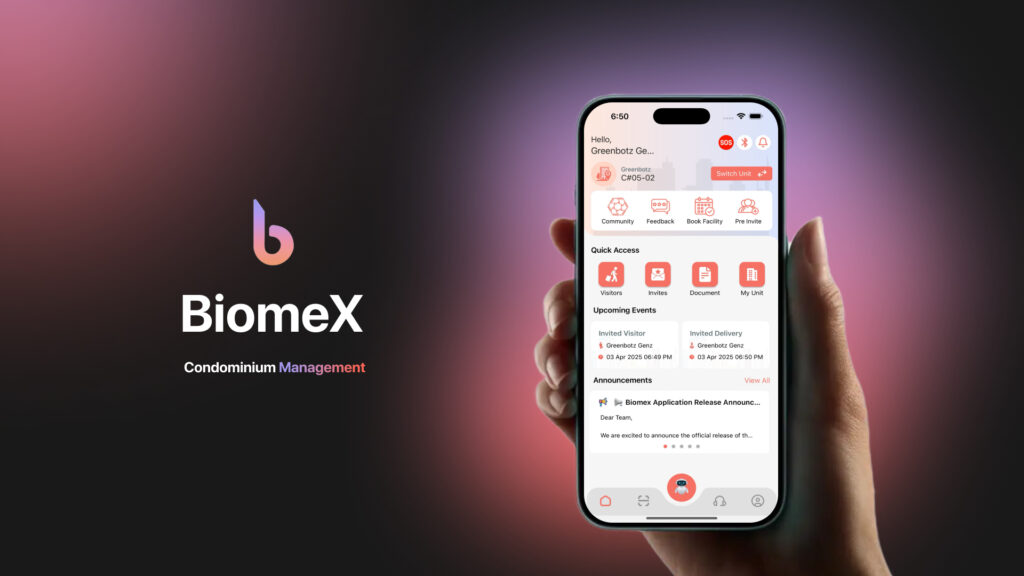
BiomeX Smart Condo App
A single BiomeX app was introduced for residents to:
- Receive announcements
- Submit feedback or service requests
- Book facilities and visitor access
- Contact security and management directly
The management team gained:
- Clear record tracking
- Centralized communication
- Faster response workflows
This eliminated scattered communication channels and improved clarity.
ANPR Carpark Access System
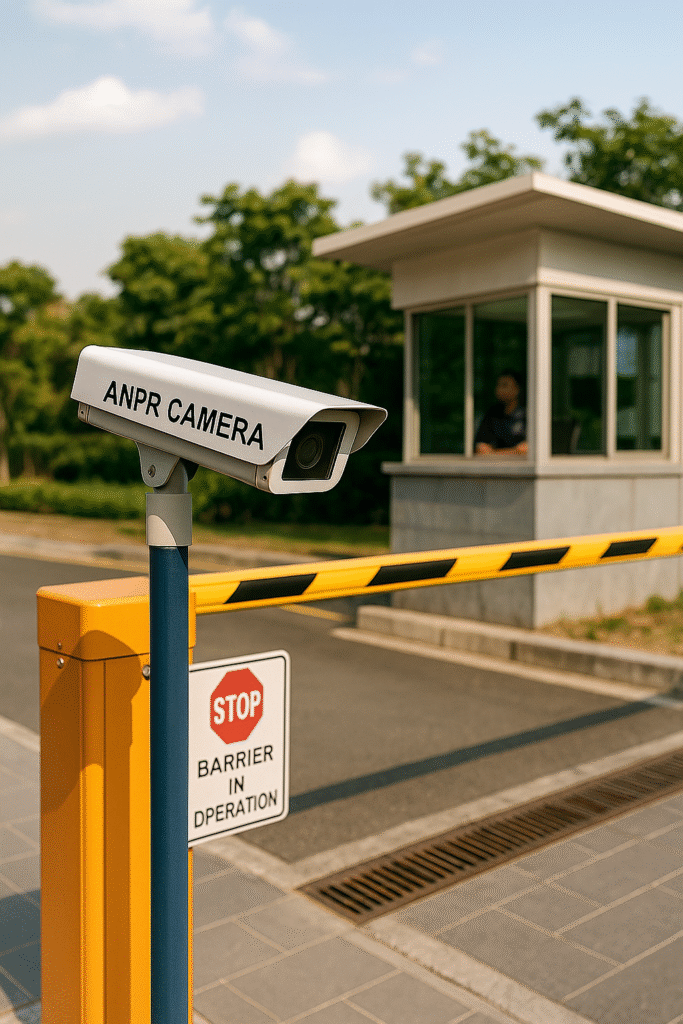
The entry system was upgraded to an Automatic Number Plate Recognition setup. Approved vehicles are now recognized automatically at the gantry, without tapping access cards or waiting for guards to verify entries.
This solution:
- Reduced carpark queue time during peak hours
- Improved vehicle tracking and visitor oversight
- Allowed guards to focus on supervision instead of gate operations
Autonomous Patrolling Robot (APR)
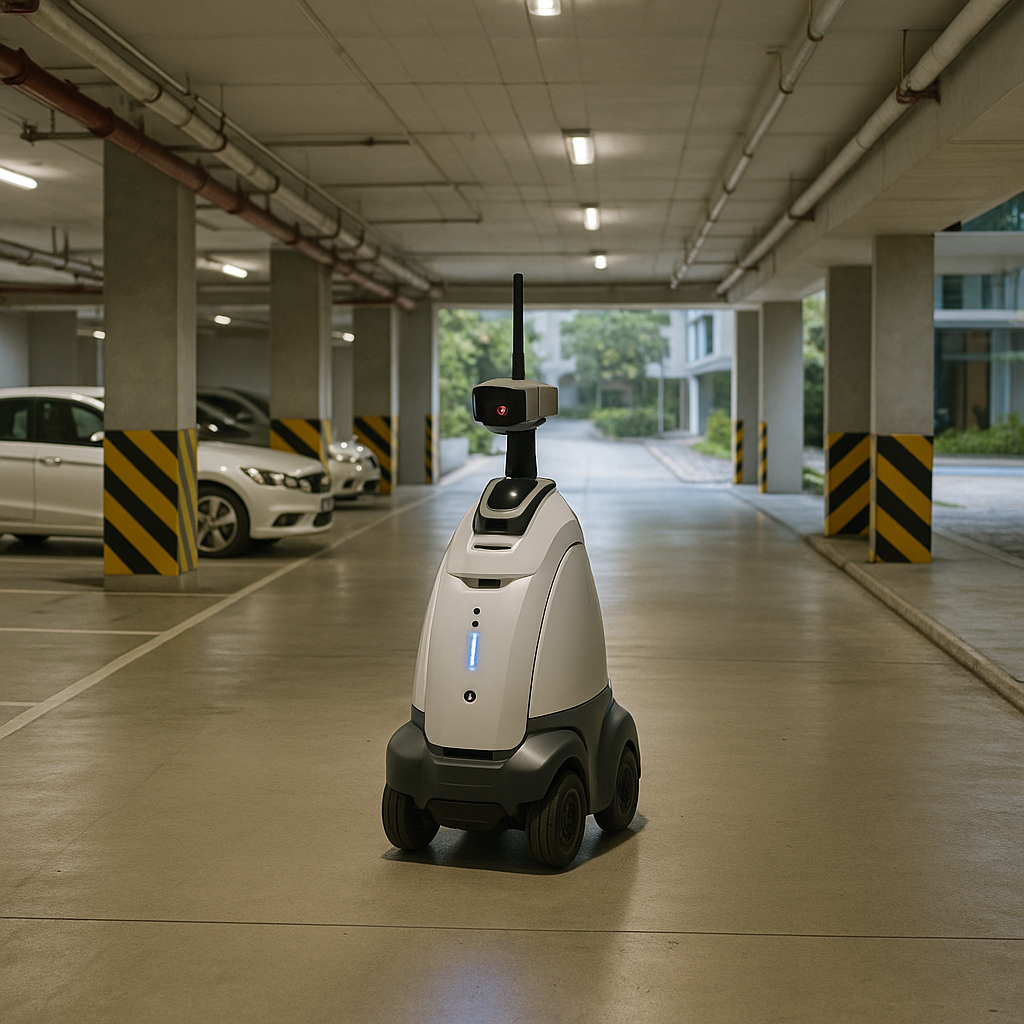
A patrolling robot was deployed to support security officers during scheduled routes, especially during night shifts. Equipped with sensors and live streaming capabilities, it provides continuous visibility of estates even when guards are stationed in the control room.
This ensured:
- Consistent patrol coverage
- Recorded surveillance footage for incident checks
- Reduced physical strain on security staff
The robot did not replace security officers. It supported them by handling repetitive patrol tasks while officers focused on decision-making and response when needed.
Results After 3 Months
| Area | Before | After |
| Resident Security Feedback | Fluctuated depending on guard availability | Improved, fewer complaints |
| CarPark Access | Delays during peak hours | Smooth and quick entry |
| Patrol Coverage | Dependent on manpower | Consistent with autonomous patrol support |
| Communication | Scattered across multiple channels | Streamlined via one smart condo app |
| Guard Workload | Heavy on physical patrols | Balanced with monitoring and response focus |
Security complaints were reduced by approximately 42%, based on internal reporting logs from the management office.
Residents shared that daily movement around the estate felt smoother, quieter, and more organized. The management council appreciated that records and incident reports were now easier to retrieve and review.
Why This Matters for Singapore Condominiums
Across Singapore, condominiums are facing:
- Higher expectations from residents
- Shortage of trained security personnel
- Increased demand for digital accessibility and convenience
This case shows that modernizing with the right technology does not remove human roles. Instead, it strengthens them by:
- Reducing repetitive manual tasks
- Improving response quality
- Increasing transparency and accountability
A smart security ecosystem supports both resident comfort and operational efficiency.
Key Considerations for MCST Decision Makers
- Start by identifying specific operational pain points
- Choose solutions that integrate, rather than operate as standalone systems
- Communicate upcoming changes to residents clearly and proactively
- Provide simple onboarding for both residents and officers
- Track improvements through logs, response times, and user feedback
Small operational enhancements, when combined, create meaningful long-term estate value.